NIOS Class 10 Economics Chapter 8: Cost and Revenue explains the basic concepts of cost, revenue and profit in the production process. In this chapter, students will learn about fixed cost, variable cost, total cost, average cost, marginal cost, explicit cost and implicit cost. The chapter also explains total revenue, average revenue and the relationship between cost, revenue and profit. These NIOS Class 10 Economics Chapter 8 solutions provide simple and clear answers to the Intext Questions and Terminal Exercises for better understanding and exam preparation.
NIOS Class 10 Economics Chapter – 8 Cost and Revenue
MODULE 3: PRODUCING GOODS AND SERVICES
TEXTBOOK QUESTIONS (SOLVED)
INTEXT QUESTIONS 8.1
Q.1. Name the payments made by the farmer to the factors of production?
Ans.
| Name of Factor | Name of Payment |
| 1. Labour. | 1. Wages. |
| 2. Service of Tractor. | 2. Rent. |
| 3. Land. | 3. Rent. |
Q.2. Who bears cost?
Ans. The producer bears cost.
INTEXT QUESTIONS 8.2
Q.1. If 48 units of output are produced and the total fixed cost is ₹ 180 along with a total variable cost is ₹ 300, what would be average cost of production?
Ans. Total Cost = TFC + TVC
= 300+180=480
Units Produced = 480

Q.2. Define fixed cost?
Ans. It is defined as the expenditure on the fixed factors of production. It does not change with the change in the level of output.
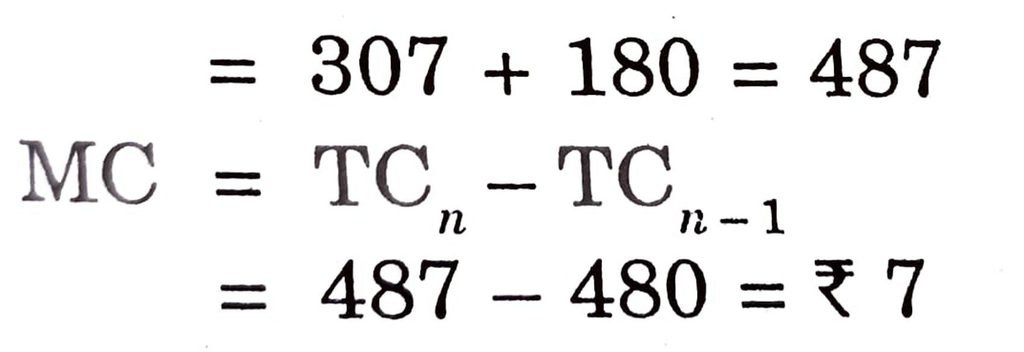
Q.3. Let output increases to 49 units in Question 1 due to which total variable cost increases to 307. What is the marginal cost?
Ans. Total cost of 48 units = 480
Total cost of 49 units
INTEXT QUESTIONS 8.3
Q. A seller sells one quintal of wheat. The price of wheat is ₹ 15 kg. What is the Total Revenue?
Ans. Total Revenue
= Price × Quantity
= ₹ 15 × 100 = ₹ 1500
INTEXT QUESTIONS 8.4
Q.1. What is the difference between average revenue and price of the good?
Ans. Average revenue = Price of the good
Q. 2. How are total and average revenue related?
Ans. Total revenue is the produce of average revenue and quantity of goods sold.
INTEXT QUESTIONS 8.5
Q. If output is 50 units, price per unit is ₹ 10, fixed cost is Rs. 110 and variable cost is ₹ 150, what is the amount of profit?
Ans. Total Revenue
= Price × Units of commodity
= ₹ 10 × 50 = ₹ 500
Total Cost = Fixed cost + Variable cost
= 110 × 150 = ₹ 260
Profit = TR – TC
= ₹ 500 – 260 = ₹ 240
TERMINAL EXERCISE
Q.1. Give the difference fixed cost and variable cost?
Ans. Fixed cost is defined as the expenditure incurred on hiring or purchasing of fixed factors/inputs which are compulsory and has nothing to do with the amount of production of the goods or services.
On the hand variable cost is the expenditure which is incurred on variable factors/inputs (such as labour) which can be
Q.2. Give the difference between explicit cost and implicit cost?
Ans. Explicit cost is defined as the money expenditure incurred by the producer for production whereas implicit cost is the cost of self-supplied factors.
Q.3. How can you calculate total cost and average cost?
Ans. Total cost is the calculated by adding total fixed cost and total variable cost, whereas average cost is calculated by dividing total cost with total output.
Q.4. How can you calculate total revenue and average revenue?
Ans. (i) Total revenue is calculated by multiplying price with total units of a commodity sold. In equation,
Total Revenue = Price × Units of a commodity sold
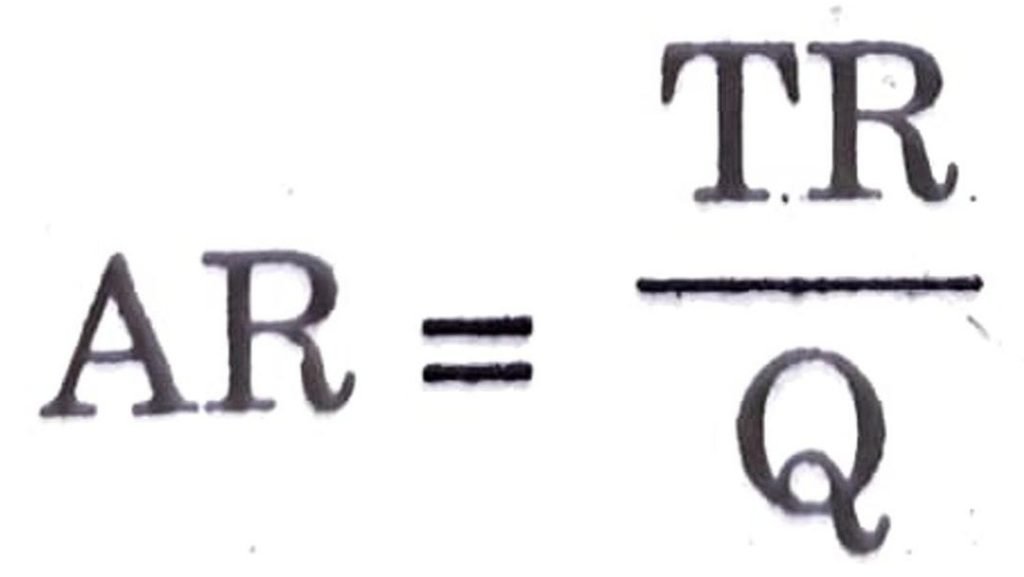
(ii) Average revenue is calculated by dividing total revenue by total units of a commodity sold. In equation,
Q. 5. Give the difference between revenue and cost? Why the producer must calculate them?
Ans. Revenue is the amount a person receives by selling certain quantity of the good at a given price whereas cost is the expenditure incurred to produce a good or during the production process.
The producer must calculate cost and revenue to know the profit.
Conclusion
The NIOS Class 10 Economics Chapter 8 “Cost and Revenue” helps students understand how producers calculate the expenses involved in production and the revenue earned from selling goods. The chapter covers different types of costs, methods of calculating total and average costs, and concepts of total and average revenue. Understanding these concepts helps students learn how a producer determines profit. The solved questions will help NIOS students revise the chapter and prepare effectively for their examinations.