NIOS Class 10 Social Science Chapter 1 – Ancient World introduces students to the history and development of ancient civilisations. This chapter covers the Bronze Age, Iron Age, Mesopotamian, Egyptian, Chinese and Indus Valley civilisations, along with Greek and Roman societies. It also explains the Vedic period, the Mauryan Empire, Jainism, Buddhism and India’s contributions to world civilisation.
In this article, students will find NIOS Class 10 Social Science Chapter 1 question answers, textbook solutions, multiple-choice questions (MCQs), very short answer questions, short answer questions and long answer questions. These study materials will help students revise important topics, understand historical concepts and prepare effectively for their NIOS Class 10 examinations.
NIOS Class 10 Social Science Chapter – 1 Ancient World
TEXT BOOK QUESTIONS WITH THEIR ANSWERS
INTEXT QUESTIONS 1.1
Q. 1. Fill in the blanks:
(a) Society in Bronze Age civilisation was divided into ____________.
Ans: Classes.
(b) ____________ seems to be the most important cause of the decline of Harappa Civilisation.
Ans: Natural calamities.
(c) The Harappan people had overseas trade with ____________.
Ans: Mesopotamia.
Q. 2. Which was the first metal used by human beings?
Ans: The first metal used by human beings was copper.
Q. 3. Name the rivers between which the Mesopotamian Civilization was founded.
Ans: The Mesopotamian civilization was founded between the rivers Tigris and Euphrates.
Q. 4. Name the ancient Egyptian script.
Ans: The Ancient Egyptian script was Hieroglyphics.
Q. 5. Name at least four sites of Harappan Civilization situated in India.
Ans: Four sites of Harappan Civilization situated in India are:
(i) Lothal
(ii) Dholavira
(iii) Kalibangan
(iv) Banawali
INTEXT QUESTIONS 1.2
Q. 1. Name the three spheres where the impact of iron implements were felt the most.
Ans: The three spheres where the impact of iron implements were felt the most were:
(i) Agriculture
(ii) Warfare
(iii) Means of Transportation.
Q. 2. Name two important city states in Greece.
Ans: Two important city states in Greece were:
(i) Sparata
(ii) Athens
Q. 3. Name the river on which the city of Rome is situated.
Ans: The city of Rome is situated on river Tiber.
Q. 4. Complete the sentences below:
(a) Constantinople was the capital of the ____________.
Ans: Byzantine Empire.
(b) The Persian King who united Persians was ____________.
Ans: Cyrus.
(c) The Indo-Aryans and the early Persians worshiped the ____________.
Ans: Forces of Nature.
INTEXT QUESTIONS 1.3
Q. 1. What were the main occupations of people in the Later Vedic Period?
Ans: The main occupations of the people in the Later Vedic Period were art and craft and agriculture.
Q. 2. Which religions did Ashoka embrace after the Kalinga War?
Ans: Ashoka embraced Buddhism after the Kalinga War.
Q. 3. Name at least four great centers of learning in Ancient India.
Ans: Four great centers of learning in Ancient India were:
(a) Nalanda
(b) Vallabhi
(c) Taxila
(d) Kashi
Q. 4. Name two great physicians of Ancient India.
Ans: Two Great physicians of Ancient India were:
(i) Charaka.
(ii) Sushruta.
Q. 5. Fill in the blanks:
(a) The Tamil work Tolkappiyam belonged to the ____________.
Ans: Sangam Age.
(b) ____________ was the capital of the Pandyas.
Ans: Madurai.
(c) Kanishka belonged to the ____________ Dynasty.
Ans: Kushana.
TERMINAL EXERCISES
Q. 1. How did the Bronze Age mark a shift from the New Stone Age?
Ans: The Bronze Age marked a shift from the New Stone Age, because during this age metals such as copper and bronze came to be widely used.
Q. 2. What were the important features of the Harappan Civilisation?
Ans: Some important features of the Harappan Civilisation were:
(i) It had an excellent skill in town planning.
(ii) It is known for its well developed drainage system.
(iii) India’s trade relation also flourished with contemporary civilizations.
(iv) Agriculture, animal husbandry, trade and commerce, etc. also flourished.
(v) The people worshiped Lord Shiva (Pashupati) which is even worshiped today.
Q. 3. Discuss how the discovery of iron brings in radical changes in the lives of the people.
Ans: The discovery of Iron bring in radical changes in the lives of people in following ways:
(i) With the discovery of iron tools and implements began to be used in agriculture. It helps in increasing agriculture yields many folds.
(ii) It had a great impact on the means of transportation. Iron rims and spokes begin to be used in the wheel in order to make it stronger.
(iii) New weapons of iron changed to methods of warfare.
Q. 4. Discuss the Roman society and economy during 5th century B.C.
Ans: Roman Society: The Roman way of life was known as Romanitas. The Roman society was comprised of three classes namely:
Patricians, plebeians and slaves.
The Patricians were the owner of lands and pasture and advised the ruler in political matters, while the plebeians were the common people. They also paid taxes and served in the army. The plebeians who failed to pay the taxes were turned into slaves. The aristocratic Roman society lived a luxurious life.
Economy: Roman society was based basically on slave labour and they (slaves) were trained for gladiator’s fight.
Q. 5. Describe social, religious and economic life of the Early Vedic People.
Ans: Social Life:
(i) Most of the people lived in villages which were known as gram.
(ii) People lived in houses made up of wood, bamboo, straw and reeds.
(ii) Family was the primary unit of the society. The head of the family was called gripati.
(iv) Society was divided into four classes, i.e., the Brahman, the Kshatriyas, the Vaishyas and the Shudras.
(v) People ate simple but nourishing foods.
(vi) People were fond of games and amusement.
Religious Life:
(i) People worshiped many gods and goddesses.
(ii) They worshiped / offered prayer in the open.
Economic Life:
(i) Agriculture was the main occupation.
(ii) Domestication of animals was also done.
(iii) People were also engaged in trade and commerce activities.
Q. 6. What is ‘Dhamma’ according to Ashoka?
Ans: ‘Dhamma’ is a Pali word which means Dharma. According to Ashoka, dhamma lay stress on high ideals of conduct in practical life to make men peaceful and virtuous.
Q. 7. Write a short note on India’s contribution to World civilisation.
Ans: Contribution of India to World civilisation:
1. Adaptability: The greatest peculiarity of Indian culture lies in its timely adaptability according to the circumstances. This is the sole reason behind the ushering of changes in our philosophy, literature, art, science, architecture, society, customs, mode of eating and drinking from time to time. But the originality of Indianism remained intact.
2. Absorption: The Indian society adapts art, literature, philosophy and all the other exterior influences. This is the only reason why solidarity gets clearly reflected through diversity in India.
3. Religious tolerance: India gave Hinduism, Buddhism, Jainism and Sikhism to the world. Secularism is the greatest gift of India to the world. The religions in India such as Christianity, Islam, Hinduism and the religion of the Parsis were woven together in a single thread of religious tolerance though they had various differences.
4. Astronomy: Varahmihir and Aryabhatta were the famous astronomers of this age. Aryabhatta discovered the causes of the solar eclipse and the lunar eclipse. He had made an inference about the circumstances of the earth too. Varahmihir had discovered that the moon revolves round the earth and the earth revolves round the Sun.
5. Science and Technology: Hard and rough steel was used in India for the first time. Many dyes were discovered with the help of chemistry.
6. Geography: We get the description of the Indian rivers, mountains and other natural regions in the Puranas. But we have never striven to know about the Geography of other countries.
7. Medicines: The Indians studied physiology in order to find remedy for many maladies of human bodies. We get a description of various types of medicines in Atharva-Veda. The famous physiologists like Charak and Sushrut have narrated the uses of herbs for the treatment of various people in their famous texts named as the Charaksamhita and the Sushrutsamhita.
The above facts reveal that India’s is a remarkable contribution to world civilization.
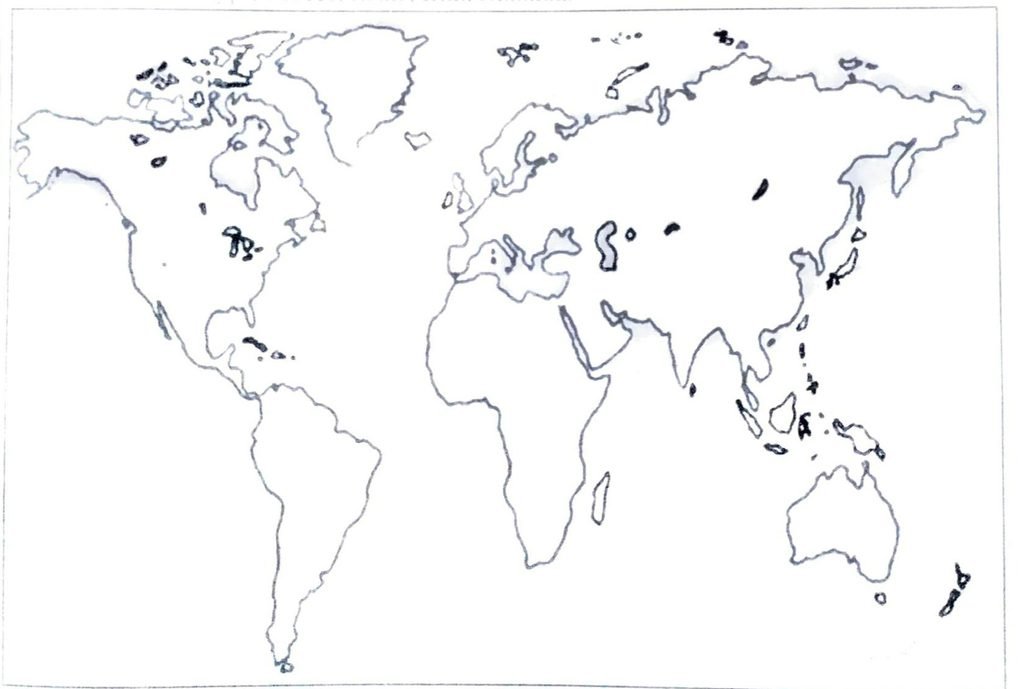
Q. 8. On the given outline map of the mark the following:
(i) Rivers: Tigris, Euphrates, Nile, Hwang Ho, Indus.
(ii) Places: Egypt, Greece, Rome, Iran, Nalanda.
Ans. Self activity.
Conclusion
NIOS Class 10 Social Science Chapter 1 – Ancient World helps students understand the rise of ancient civilisations, their cultures, social structures, religious beliefs and achievements. By studying the textbook question answers, MCQs and other important examination questions provided in this article, students can strengthen their understanding and revise the chapter effectively.
Practising the questions in NIOS Class 10 Social Science Chapter 1 regularly will help students remember important facts, improve their subject knowledge and prepare confidently for their NIOS Class 10 Social Science examination.